
If you are new to the markets, one of the first things you’ll come across is an ETF. But what actually is that? A stock? Or something completely different?
What an ETF actually is
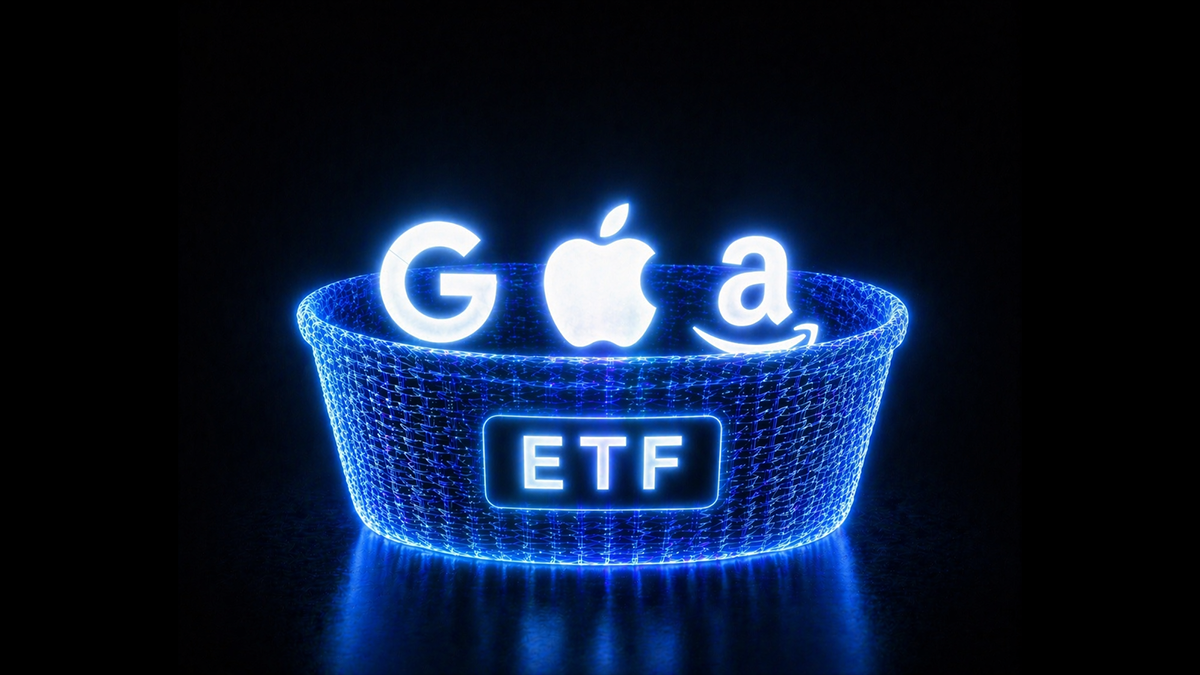
An ETF (Exchange Traded Fund) is a fund that holds a collection of assets, usually stocks. Think of it like a basket of multiple Stocks.
This is why ETFs are one of the most popular ways to invest.
The S&P500
The S&P500 is not actually an ETF – it’s an index, which tracks the largest 500 US companies by market cap. ETFs like SPY, IVV or VOO are tracking it.
You can’t buy the index itself but an ETF that tracks its performance.
With an ETF, you’re not just investing in multiple companies, but often entire sectors.
For example:
- Tech
- Finance
- Healthcare
- Energy
- Consumer Goods
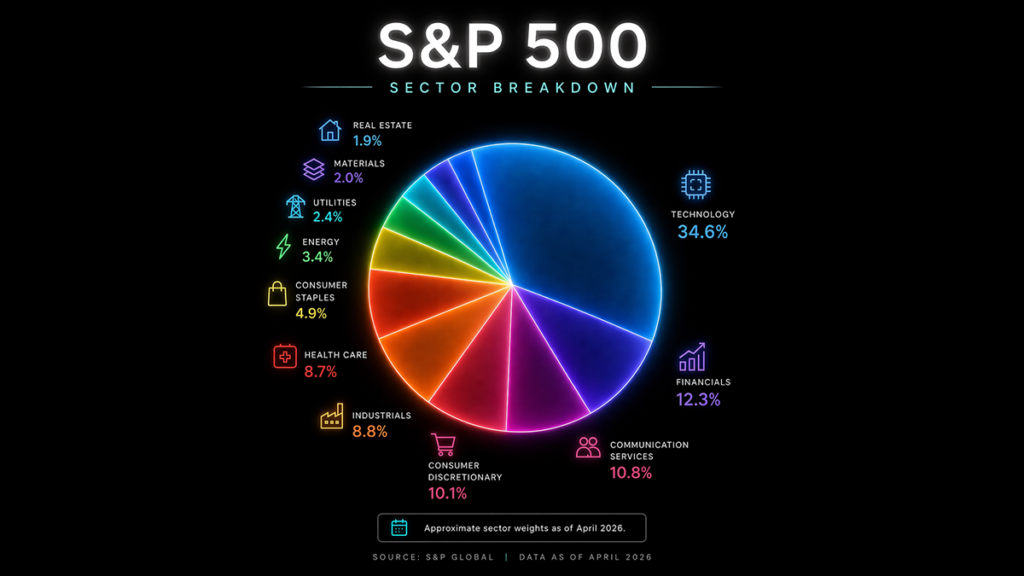
Companies within the S&P500 include:
- Coca Cola
- Alphabet
- Visa
- Walmart
- JPMorgan Chase
This gives you a more balanced and diversified exposure to the market, often with less volatility than individual stocks.
The NASDAQ
The NASDAQ itself is a stock exchange. When people refer to the NASDAQ – they usually mean the NASDAQ-100, which is the index tracking the largest 100 non-financial companies listed on it. QQQ for example, is one of the ETFs tracking this index.
Compared to the S&P500, the NASDAQ-100 is more tech heavy, giving you a more concentrated exposure.
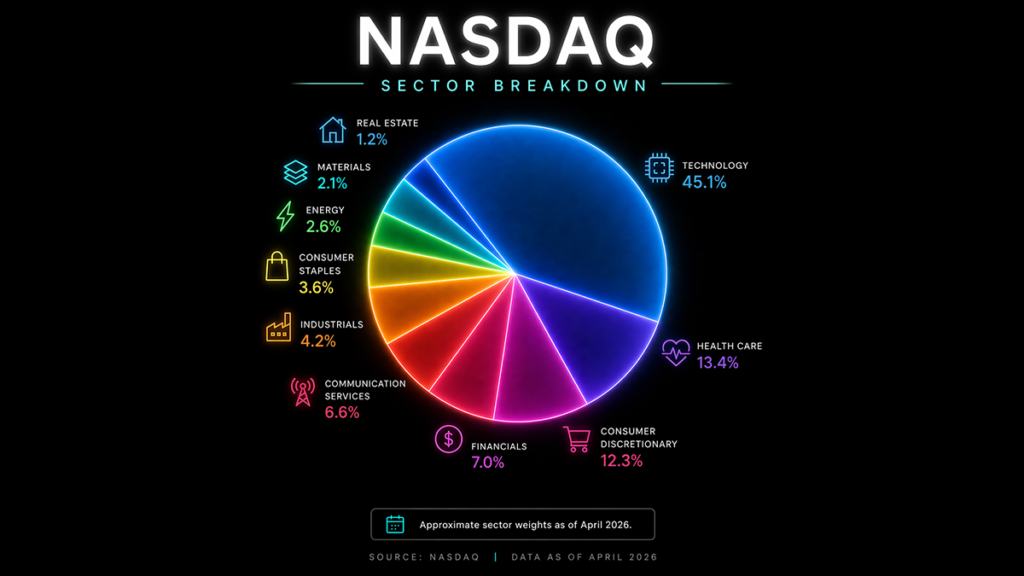
Companies within the NASDAQ-100 include:
- NVIDIA
- Apple
- Amazon
- Micron Technology
- AMD
This gives you higher growth potential, more volatility as well as higher ups and downs.
How ETFs move
The price of an ETF moves based on the combined performance of the stocks inside of them.
Stocks go up -> ETF goes up.
Stocks go down -> ETF goes down.
Investing in an ETF usually won’t give you the extreme returns individual stocks can, but it also comes with less risk.
In the markets it usually works like this:
high risk -> high reward
low risk -> lower reward
For beginners, ETFs are one of the simplest ways to get started in the market.
This article is for informational purposes only and does not constitute financial advice.
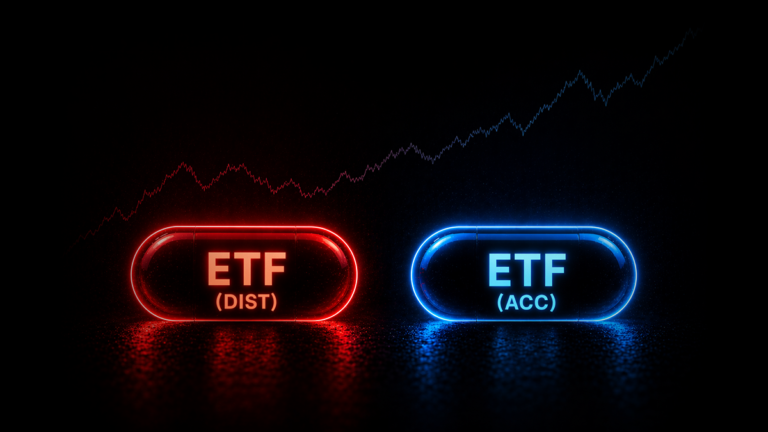
Once you pick an ETF to invest in, you’ll notice that they usually come in accumulating (acc) and distributing (dist) versions. Now the questions is: Which one of those versions is the right choice?