
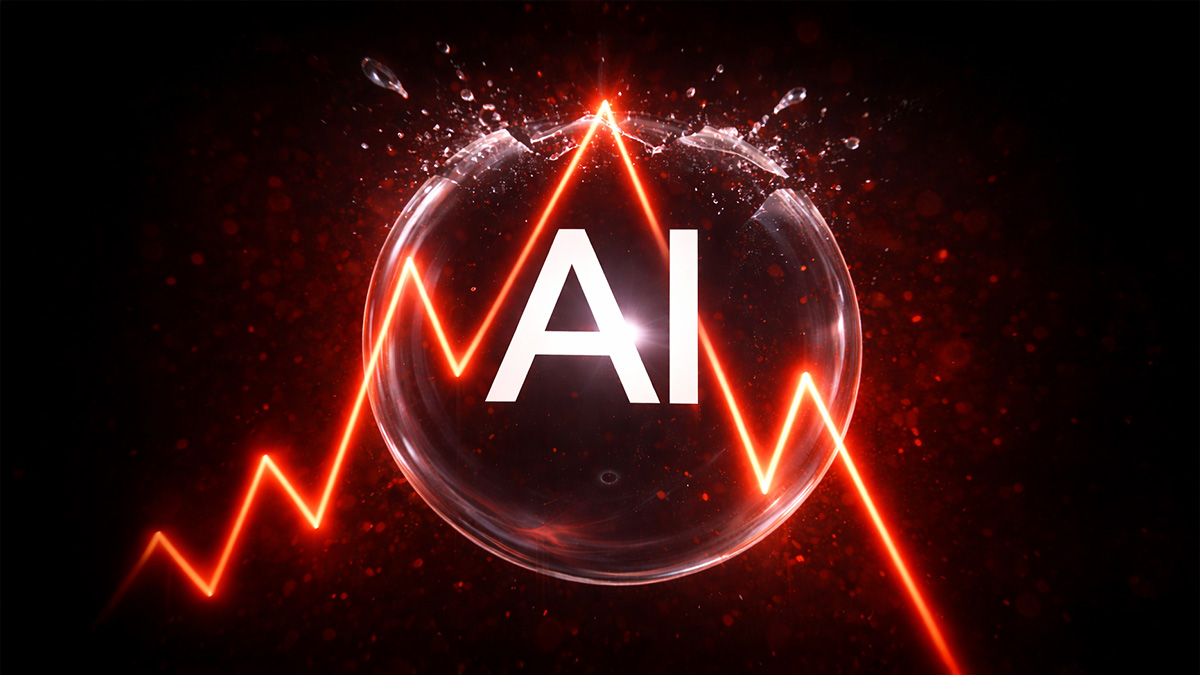
The dot-com bubble was one of the biggest financial bubbles in history – causing a massive market collapse, wiping out trillions in market value, triggering company failures, bankruptcies, and a recession. Could history repeat itself – this time with AI?
AI: hype and fear in the markets
AI is already creating both massive hype and fear in the markets. On one side, investors believe AI will replace entire industries, People fear losing their Jobs to AI. And tech stocks? Have already taken a hit due to AI fear as well.
On the other side, there is a growing concern that expectations have gone too far – that current valuations expect a future that might not fully materialize.
So which one is it? A true technological revolution – or a massive bubble about to burst?
Technological revolutions and market bubbles
Historically, technological revolutions and financial bubbles happen at the same time, but they are not the same thing.
A classic example is the internet boom of the late 1990s, which reached its peak in the dot-com bubble.
The internet was revolutionary. But investor enthusiasm quickly got out of hand – money started pouring into any company with “.com” in the name, even if the company had no real business, provided actual value or even made revenue.
In the year 2000, hundreds of internet companies collapsed and the NASDAQ fell almost 80%. The bubble popped, yet technology won. Out of that crash, companies like Google and Amazon emerged. And decades later, we all know them. We all use them. They became the industry leaders.
The internet itself wasn’t a bubble – the valuations were.
AI might follow the same pattern.
Signs that parts of AI might be Overhyped
Some signs suggest bubble-like dynamics in certain Areas.
Massive capital is flowing into AI.
Companies like Google, Amazon, NVIDIA and Microsoft are investing hundreds of billions of dollars into AI infrastructure.
At the same time thousands of AI startups exist, and many of them are just wrappers around existing models, which resembles the dot-com era “website companies”.
Just like companies once added “.com” to raise stock prices, many companies today add “AI” or “powered by AI” to their marketing. But oftentimes it’s just basic automation or a thin layer on top of already existing API’s. That doesn’t mean the technology is straight up fake, but valuations can detach from reality.
AI infrastructure spending may be ahead of demand
Right now, huge data centers and GPU’s are being built. For example, companies are buying enormous amounts of chips from NVIDIA.
The risk here is that if AI adoption doesn’t grow as fast as expected, infrastructure spending could simply overshoot, which is a classic bubble dynamic.
The concern about overbuilding is actively discussed and backed by data. Capital expenditures among the magnificent seven surged 40% year over year in 2024, reaching over $200 billion – largely directed towards AI infrastructure.
Update:
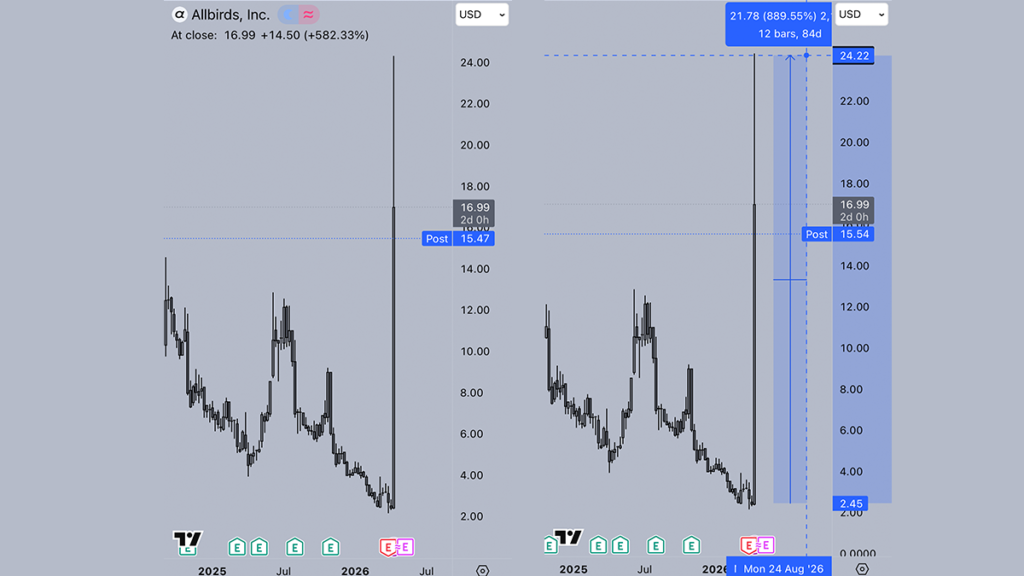
some time has passed after i wrote this article and two companies have announced a shift to AI, which caused their stocks to skyrocket.
Charts by TradingView
First there was Allbirds ($BIRD), who announced that they will shift from footwear to AI infrastructure, which caused it’s stock price shooting up nearly 600% intraday.
Charts by TradingView
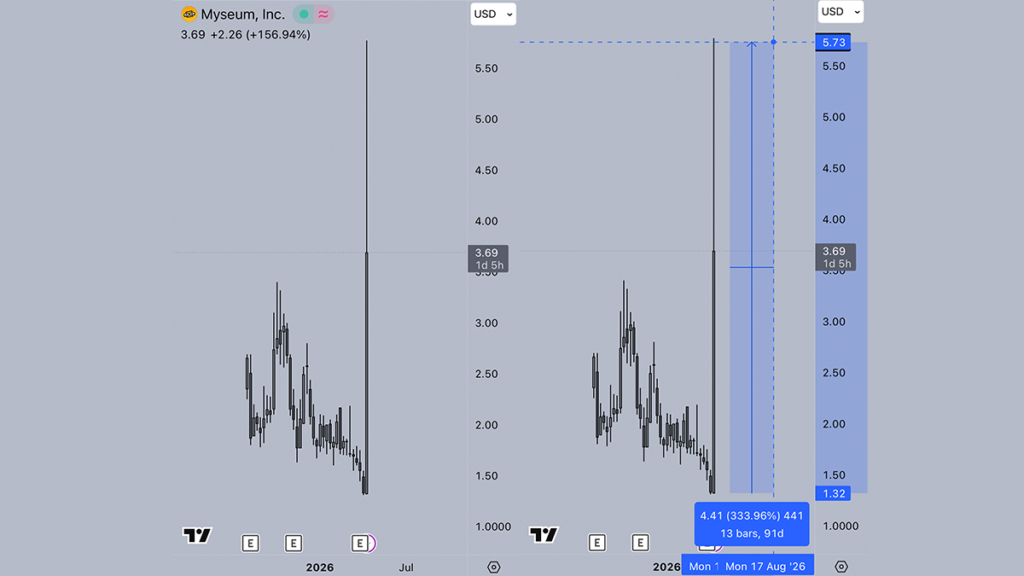
After that, Myseum Inc ($MYSE) rebranded as as Myseum AI, causing it’s stock to pump around 150% intraday.
Starting to see a resemblance to the dot-com era?
Why AI might not be a bubble
At the same time, there are also reasons for why AI might be structurally different.
Unlike early dot-com companies, NVIDIA’s revenue grew from $27 billion in the fiscal year 2022 to $96 billion in the fiscal year 2025, driven by data center demand, which is actual revenue, not speculation.
Also, unlike the early internet, AI is already being used in different areas, like:
- coding
- medicine
- finance
- logistics
- marketing
- automation
Also, major productivity tools already integrate AI as well:
- GitHub Copilot
- Notion AI
- Google Gemini
So real gains in productivity are already happening, which makes AI more like a general purpose technology like the internet, electricity or a smartphone.
The most likely AI bubble scenario
So in conclusion, the most likely outcome is that AI itself is not a bubble. But the AI market probably is. Which means AI could follow the same path of how revolutionary technologies historically spread: massive hype -> massive investment -> widespread failures -> market correction-> long term winners emerge.
This is exactly what happened after the dot-com crash. Companies that survive could become the next generation of giants.
Even though AI might represent a long term structural shift, AI stocks are still likely cyclical and hype driven. Even leaders like NVIDIA and Palantir can still take a hit. (just like any stock), especially if the sentiment flips. Just like Cisco systems dropped 88% after the dot-com bubble. Cisco was a real company with real revenue. And even though Cisco was one of the few companies that survived the dot-com burst, it took the Cisco stock 25 years to regain/surpass its high which was made during the dot-com peak.
This article is for informational purposes only and does not constitute financial advice.